Finance & AI Workshop
40+ students from 10 schools across the Port Chester–Rye–Fairfield County area spent an evening at Greenwich Town Hall covering a condensed finance curriculum, then building a working AI stock-prediction agent in Python.
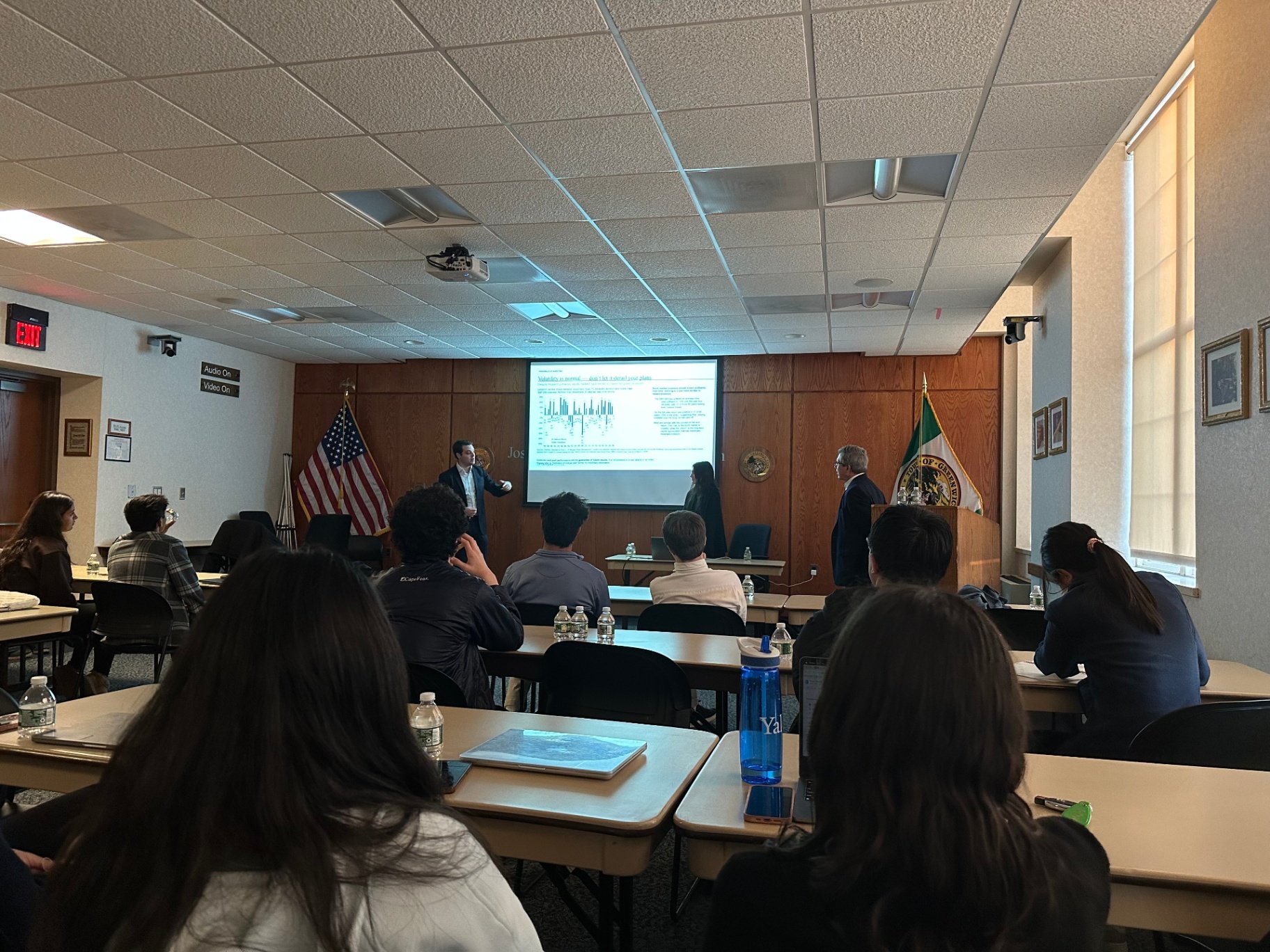
Modern markets are run substantially by code. Students hear "quant" and "AI in finance" constantly and almost never get to see what either actually looks like. The second Greenwich Finance Series event was built to fix that in one evening, first the finance, then the machine learning, then a notebook the students ran themselves.
Part one: the condensed curriculum
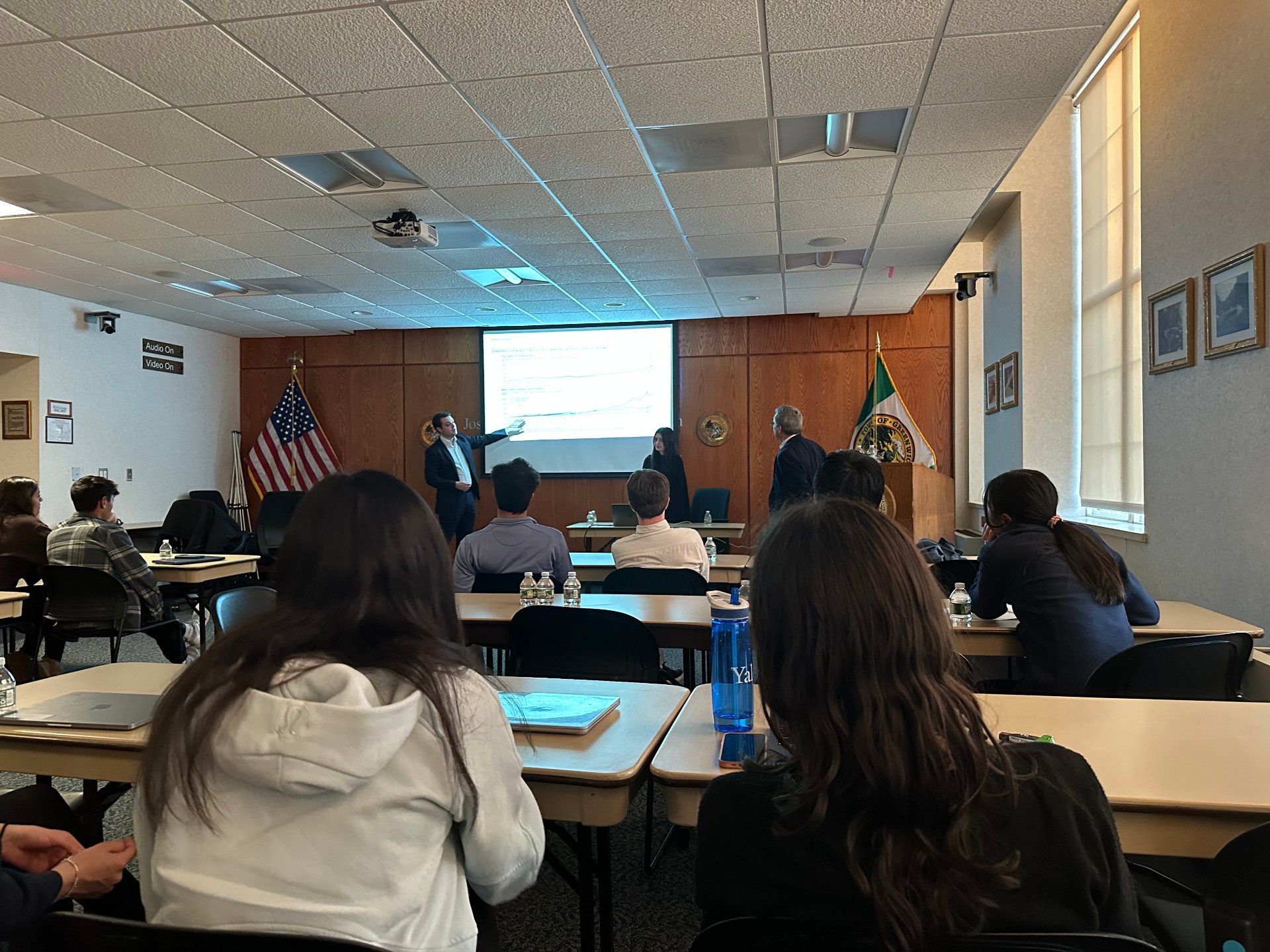
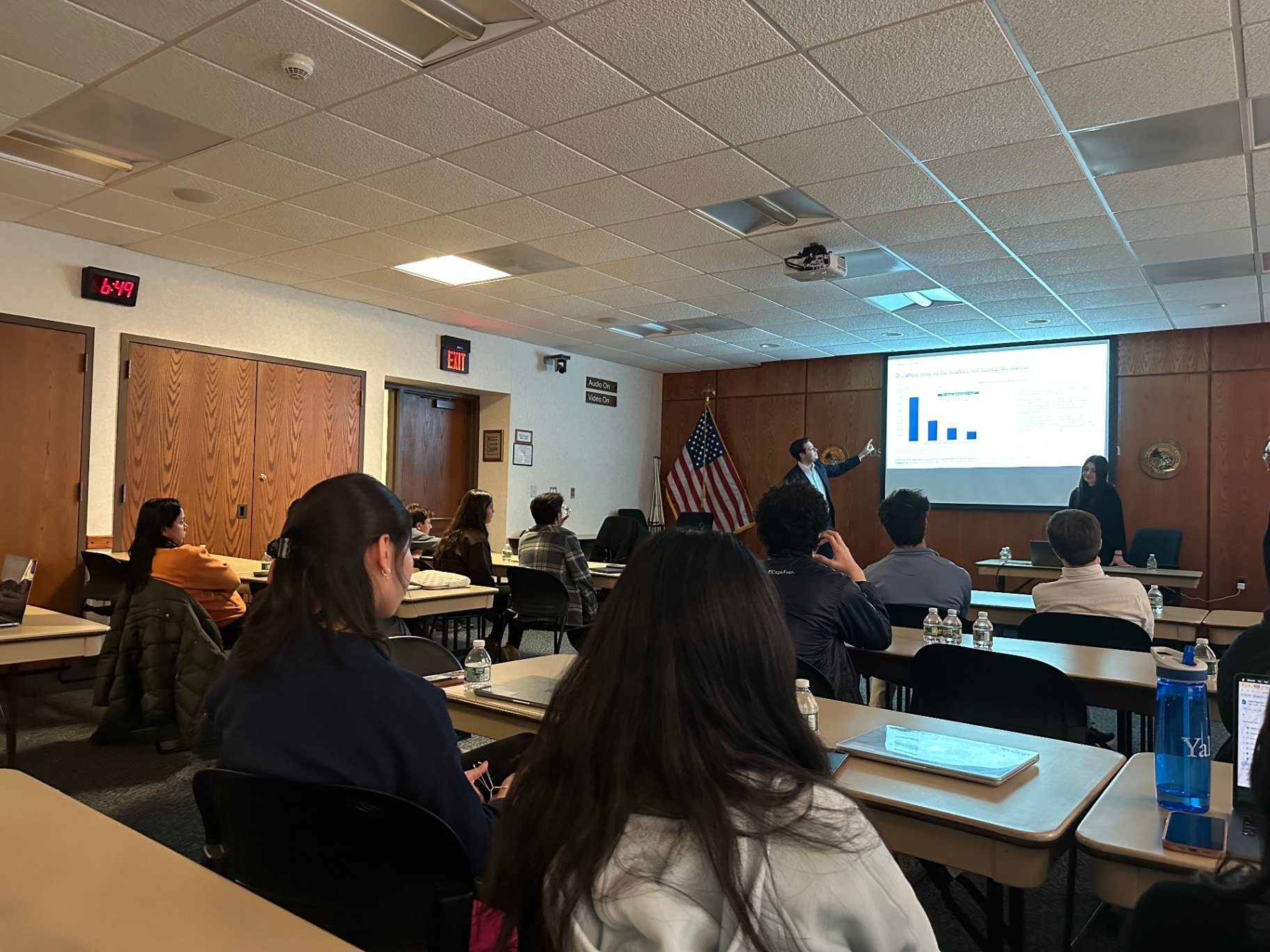
The first half compressed the foundations from our 2025 flagship session into a faster segment for a room that skewed slightly older: how income becomes net pay, how taxes are actually assessed, and why diversification and time horizon dominate almost every other investing decision.
Presenters worked from real market data rather than illustrations, including a walkthrough of long-run equity returns and what a bad decade looks like inside a good century.
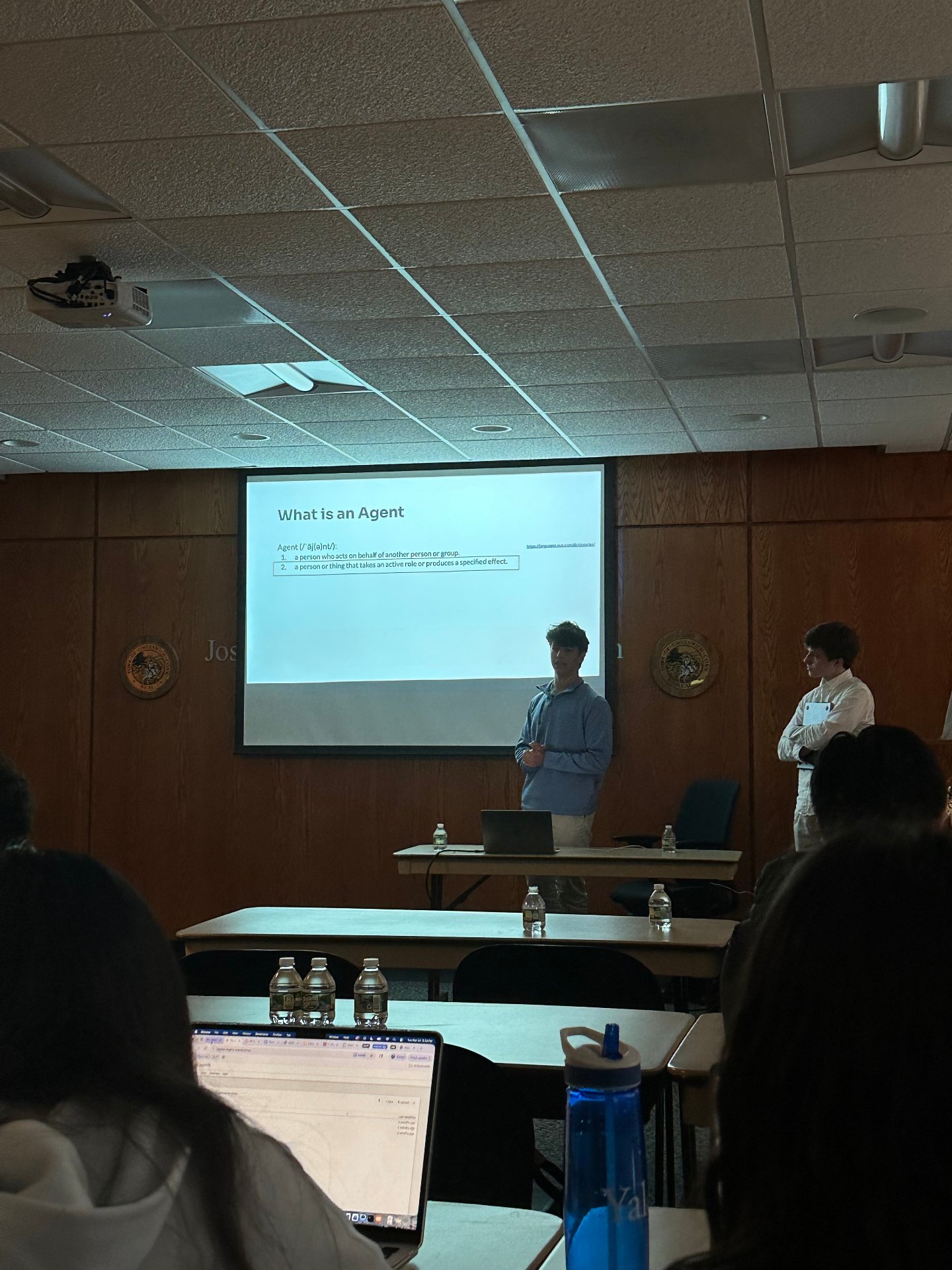
Part two: building an AI stock-prediction agent
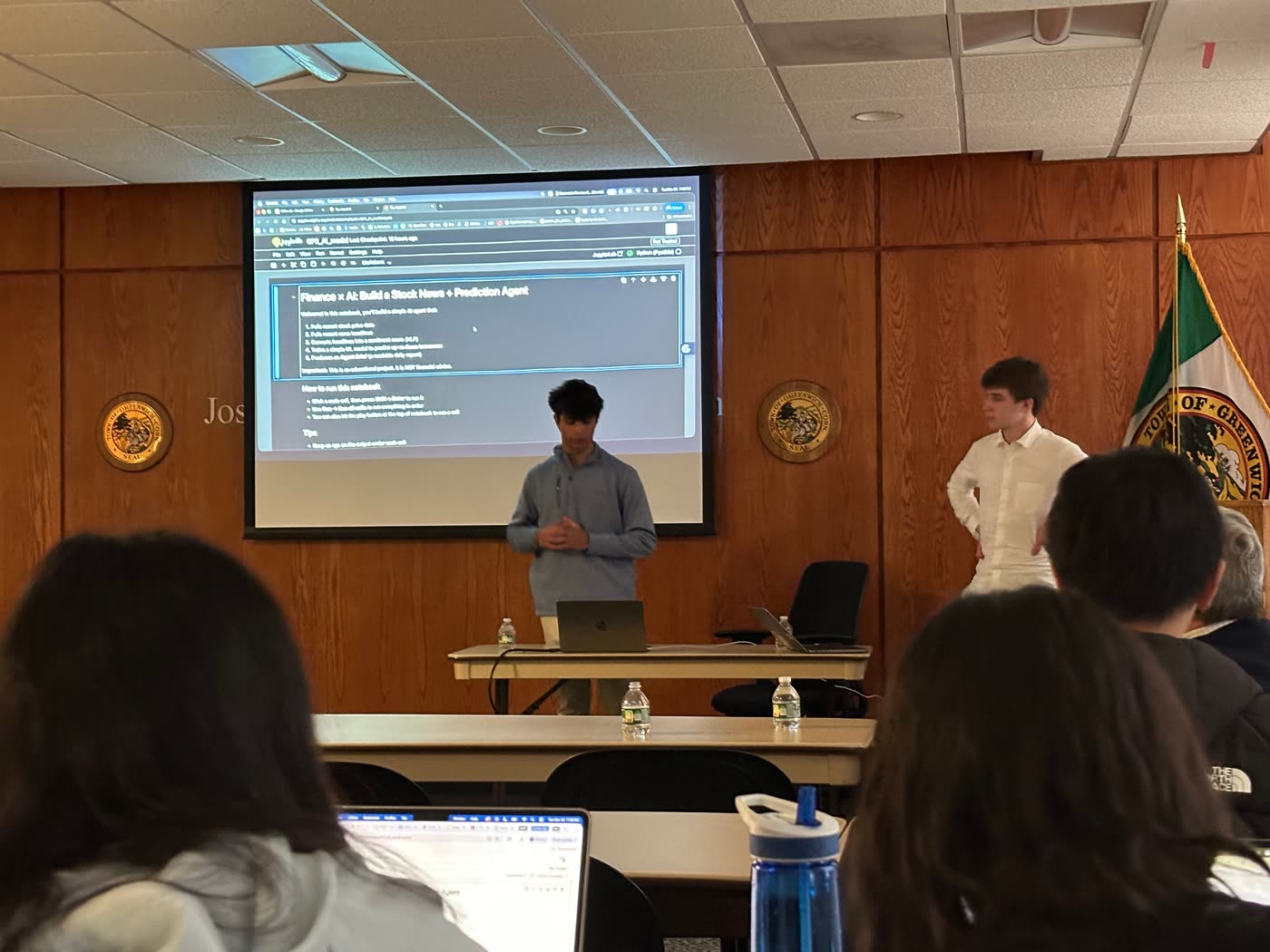
The second half was hands-on. Our team wrote a Python notebook, hosted in Google Colab so that nothing had to be installed, that assembles a basic stock data and prediction agent end to end. Students opened it on their own laptops and ran it cell by cell alongside the presenters.
The notebook walks through the same shape of pipeline a quantitative desk uses:
- Pull historical price and volume data for a chosen ticker.
- Engineer features, returns, moving averages, volatility windows.
- Split the series into training and held-out test periods, in chronological order.
- Fit a model, then evaluate it on data it has never seen.
- Wrap the model in an "agent" loop that decides, rather than just predicts.
The most important segment was the last one: why the backtest looks better than reality, what lookahead bias is, and why a model that appears to beat the market on historical data almost never does so on live data. The point was not to hand students a trading system. It was to show them how one is built, and exactly where such systems break.
The full technical write-up is available as a free guide: AI & Quantitative Finance.
By the numbers
- 40+ students attended.
- 10 schools represented across Fairfield and Westchester counties.
- 4 accredited finance professionals presented.
- Free to every attendee, as all our events are.
Who made it
The workshop was co-organised by our student team, who also built and tested the notebook the attendees ran. Meet the team and presenters · See photographs from the evening
More photographs