Financial Literacy
for High Schoolers
Our first event brought 30+ students, representing every public and private high school in Greenwich, together with two practising finance professionals for a single evening covering budgeting, taxes, and investing.
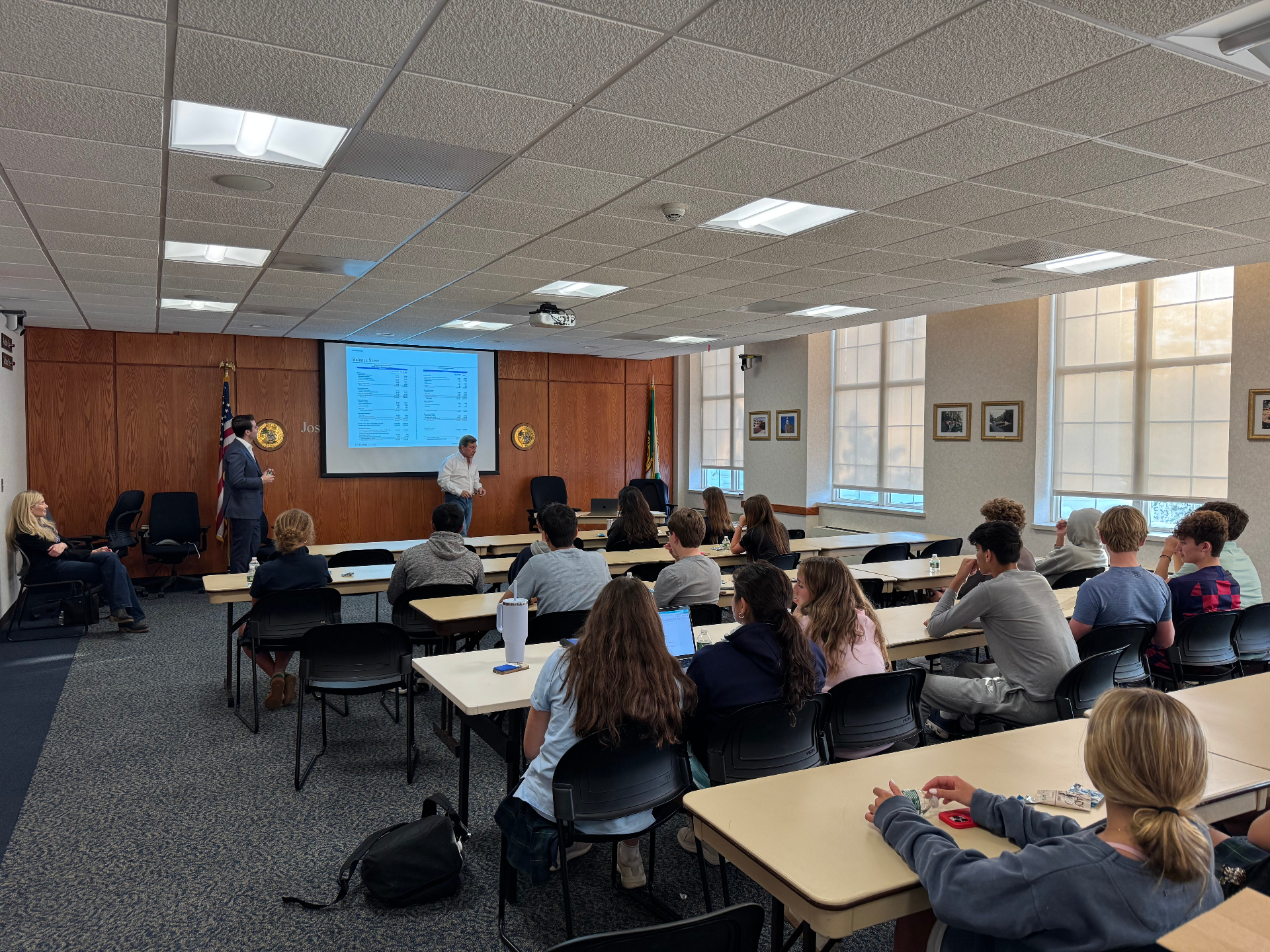
Financial literacy is not a graduation requirement in most Connecticut high schools. Students leave with a strong academic record and no working understanding of a paycheck, a tax withholding line, or a brokerage account. This session was built to close the most immediately useful part of that gap in a single sitting.
Who taught it
We deliberately kept the room small and the speakers senior. Rather than a lecture from a curriculum vendor, students heard from people who make these decisions professionally every day:
- A small-cap private equity founder, on how businesses are actually valued and what "risk" means when real money is committed.
- A J.P. Morgan private wealth advisor, on how households build wealth over decades, and the small number of decisions that account for most of the outcome.
Every speaker gave their time for free, and every seat was free. Meet the presenters and organisers.
What we covered
Budgeting
We started where students actually are: an hourly job, an allowance, or a summer paycheck. The segment worked through separating fixed from variable spending, why a written plan beats a mental one, and how to size an emergency buffer when your income is seasonal.
Taxes
Most students in the room had either just filled out a W-4 or were about to. We walked through gross versus net pay, what withholding is and why it appears before you ever see the money, and how marginal brackets work, the single most commonly misunderstood mechanic in the U.S. tax code.
Investing
The final segment covered compounding, diversification, and index funds, and closed on the practical question students most wanted answered: what can someone under 18 actually open, and what is a reasonable first amount to put in.
Each of these three segments is now written up in full as a free guide: budgeting, taxes, and investing.
Results
We surveyed attendees at the end of the session. Across respondents:
- 4.65 / 5 average overall rating of the event.
- 4.18 / 5 average self-reported likelihood of beginning to invest within six months.
- 30+ students attended, drawn from every high school in Greenwich.
That second number is the one we care about most. Rating an event highly is easy; changing what someone intends to do with their own money in the next six months is the actual goal.
What came next
The demand from this session, particularly the questions about how technology is changing finance, led directly to our second event, the Finance & AI Workshop at Greenwich Town Hall, where students built a working stock-prediction agent in Python.
See photographs from this event · Ask about attending the next one